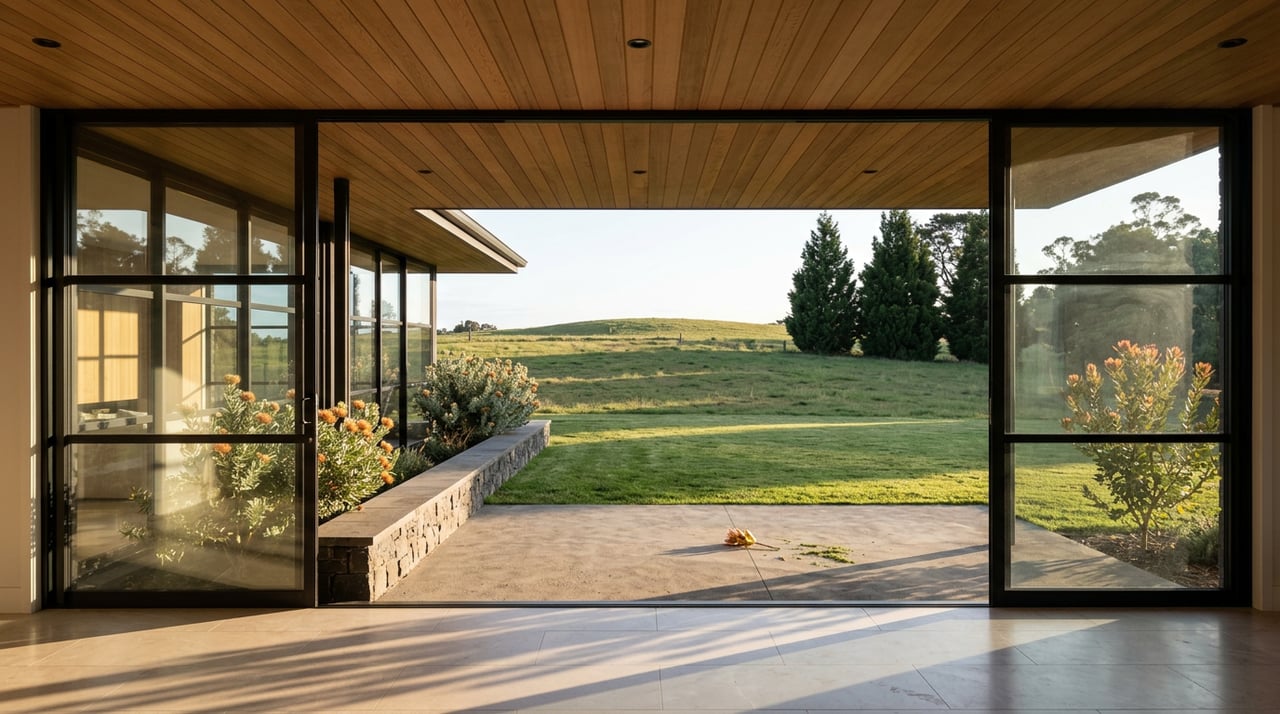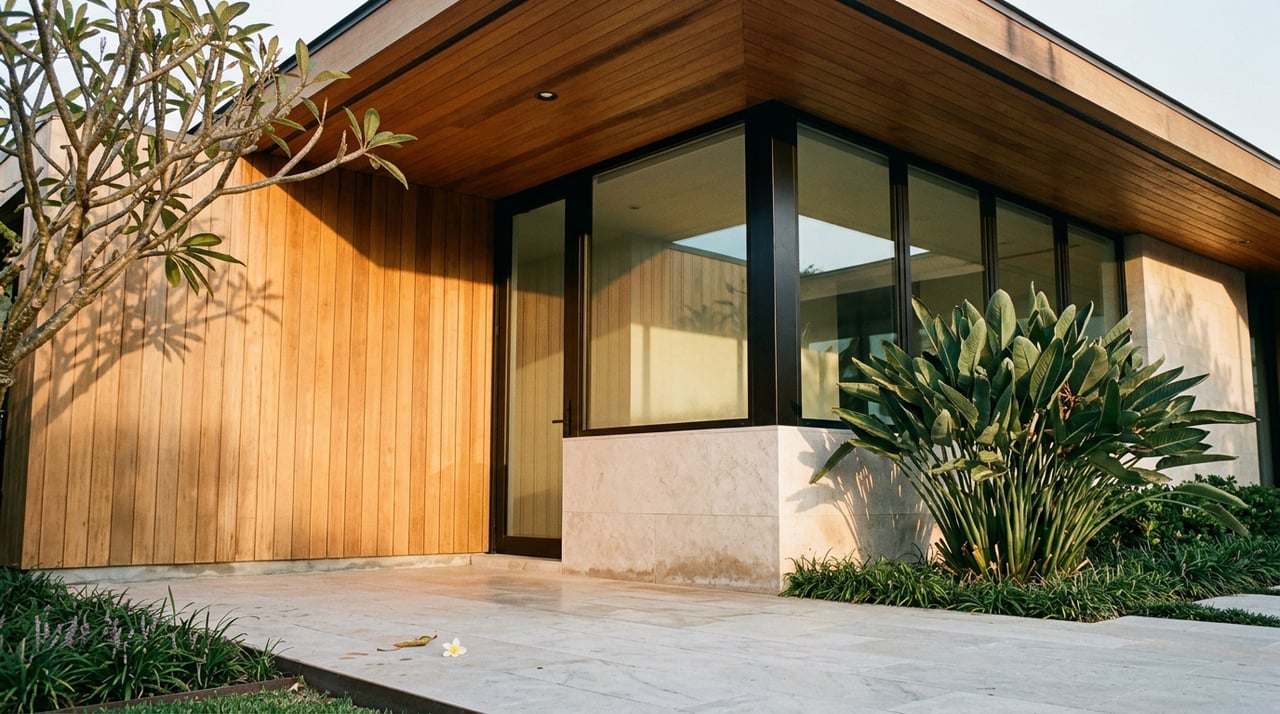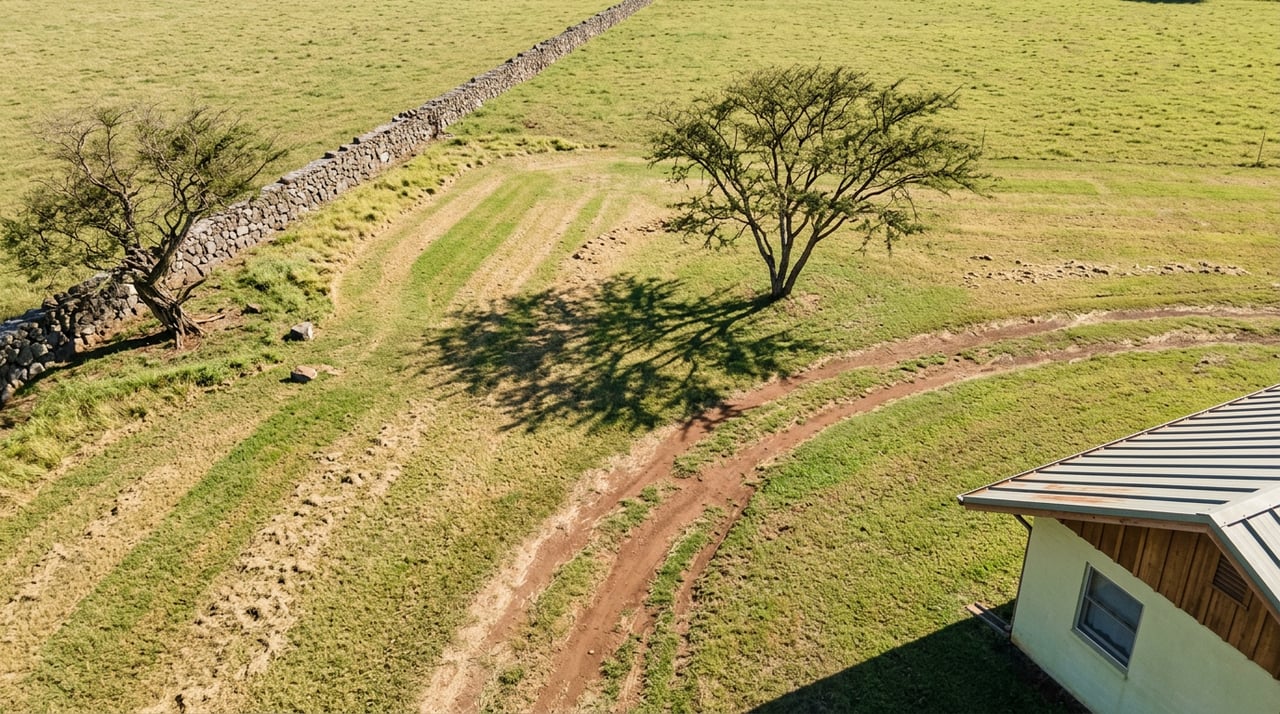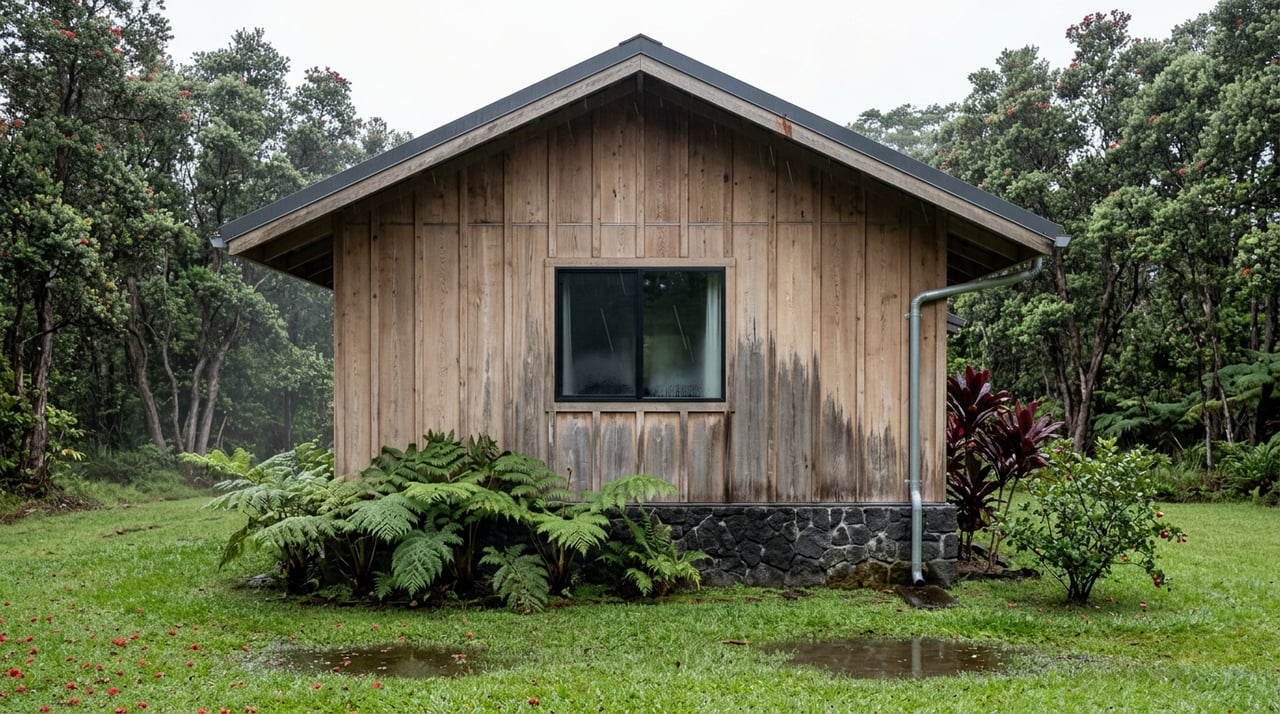
Two cottages sit side by side on Haunani Road in Volcano Village, each with its own address, its own carport, its own catchment tank, and its own cesspool. They were built for a county school superintendent and his sister, and the Volcano Village Historic Building Inventory, compiled by architect Boone Morrison in 1993, dates the red one to 1930. Boone's research also found that Volcano holds the highest concentration of homes built before 1950 anywhere in Hawaii. Those two cottages are still standing, still selling, and still running exactly the way they did nearly a century ago.
That detail matters more than it sounds like it should. In most Big Island conversations about Hawaii's cesspool law, the wastewater question gets framed as a possibility. A buyer might inherit a cesspool. A seller might need to disclose one. In Volcano, there is no sewer line to opt into and never has been. Every home in the Village and its surrounding subdivisions runs on a private system, full stop. That single fact changes how the rest of the law should be read here.
The rest of the island has an escape hatch. Volcano doesn't.
Public sewer service on the Big Island is limited to a handful of denser pockets, mostly downtown corridors and resort areas. Hilo has partial coverage. Kona has none in most residential zones. Volcano Village has none at all. The Hawaiian Electric Light Company runs power through the ʻōhiʻa forest to reach the Village, but no wastewater utility follows it. Every parcel here, from a half-acre lot inside Volcano Golf and Country Club to a three-acre homestead in Fern Forest Vacation Estates, handles its own sewage on-site.
For a buyer comparing a Volcano listing to something in Waikoloa or Kailua-Kona, this is the detail that doesn't show up in a search filter. A coastal condo might sit on a connected sewer main. A Volcano cabin in Royal Hawaiian Estates or Ohia Estates will not, no matter the price point. The question isn't whether the property has a cesspool or a septic system. It's which one, and how close it is to the front of the line for mandatory conversion.
Act 125 set the deadline. Volcano's ground sets the price.
Hawaii banned new cesspool construction back in 2016. The following year, Act 125 set a statewide deadline requiring every existing cesspool to be upgraded, converted to septic, or otherwise closed by January 1, 2050. That part of the story has been told everywhere, and by now most Big Island buyers have heard the headline number: conversions can run anywhere from twenty thousand dollars to fifty thousand dollars or more.
What doesn't get said often enough is that Volcano sits at the expensive, slow end of that range for reasons specific to the place. A new aerobic treatment system, the modern standard for a home without cesspool infrastructure, typically runs between eighteen thousand and thirty thousand dollars in 2026 dollars once design, permitting, percolation testing, and installation are all accounted for. Converting an existing cesspool tends to land between twenty thousand and forty-five thousand dollars, with the final number driven almost entirely by lot grade and equipment access.
Here's why those numbers skew high in Volcano specifically. The subdivision soil is dense volcanic rock, which means a proper leach field often requires heavy equipment and, in some cases, literal jackhammering to excavate. The climate compounds the problem. Volcano sits on a subtropical highland climate pattern with rainfall concentrated from November through April, and a saturated leach field treats wastewater poorly no matter how well it was engineered. Contractors have to size systems for ground that rarely gets a chance to fully dry out.
| Typical statewide range | Typical Volcano range | |
|---|---|---|
| New aerobic treatment install | $20,000 to $50,000+ | $18,000 to $30,000 |
| Cesspool conversion to septic | $20,000 to $50,000+ | $20,000 to $45,000 |
| Wastewater plan approval timeline | Varies by district | 3 to 6 months, per the Department of Health Wastewater Branch |
The county handles building permits. The state Department of Health Wastewater Branch approves the actual wastewater design, and that review alone can take three to six months depending on the district. A buyer who assumes a conversion is a weekend project is planning against the wrong calendar entirely.
Why catchment water might actually work in your favor
Here's the part of the cesspool conversation that rarely gets localized to Volcano, and it cuts against the usual urgency narrative.
The state's Department of Health ranks cesspools into three priority tiers for accelerated conversion, and the ranking is built around proximity to drinking water. Priority 1 systems sit near wells, streams, or coastal waters where contamination risk to a water source is highest. That's the tier driving faster timelines in places like Kealakehe or along parts of the Kona coast.
Volcano properties draw drinking water from rain catchment, not from wells or a shared aquifer. There's no nearby drinking water source for a cesspool to threaten in the way the priority system is built to measure. That doesn't mean Volcano cesspools are exempt from the 2050 deadline, and it doesn't mean groundwater and stream contamination aren't real concerns statewide. It does mean the same proximity math that pushes some coastal properties toward an accelerated timeline doesn't apply here in the same way, which is worth knowing before you assume your Volcano purchase is facing the same clock as a beachfront lot forty minutes away.
A financing door just opened in 2026
The biggest practical barrier to any of this has always been cost, not awareness. House Bill 1618, introduced in the 2026 legislative session, is the state's first real attempt to address that directly. It creates financing mechanisms, including low-interest and potentially forgivable loans, through a revolving fund managed by the Hawaii Green Infrastructure Authority. The bill doesn't change the 2050 deadline. It changes who can realistically afford to meet it.
For a Volcano seller sitting on an unconverted cesspool, that's a genuinely useful negotiating card. Instead of absorbing a full price reduction to cover a buyer's future conversion cost, the conversation can now include a path to financing that didn't exist a year ago.
The market gives you room to have this conversation properly
The last published snapshot of the Volcano market, covering the year ending August 2025, put the median sale price at $420,000 with a typical listing taking 93 days to sell. Even allowing for normal month-to-month movement since then, this has not been a market where offers get accepted in forty-eight hours with no time to think through a wastewater system. It's a market slow enough that a buyer can request documentation, a seller can get a septic contractor out for an honest assessment, and both sides can negotiate a credit or a price adjustment instead of pretending the issue doesn't exist.
That timeline matters because rushing this particular decision tends to be where things go wrong. Before you write or accept an offer on a Volcano property, a few things are worth confirming:
- Ask the seller for the wastewater permit on file, or search by TMK through the Hawaii Department of Health Wastewater Branch to see what system is registered.
- If no permit record exists, treat it as an unpermitted cesspool until proven otherwise. Many older Volcano homes, like the Haunani Road cottages, predate modern permitting entirely.
- Get a septic contractor familiar with Volcano's terrain to walk the lot before you finalize a price. Grade and access change the cost estimate more than almost any other variable.
- Ask your agent to flag the wastewater status with escrow early, not the week before closing.
A few questions that come up often
Does every home in Volcano have either a cesspool or a septic system? Yes. There is no public sewer connection anywhere in the Village or its surrounding subdivisions, so every property relies on one or the other.
If I buy a home with a cesspool, do I have to convert it right away? Not necessarily. The 2050 deadline is the outer limit for compliance statewide. Some situations, like a major renovation that adds bedrooms or significantly alters plumbing, can trigger an earlier requirement. Otherwise, most buyers proceed with a plan to convert on their own timeline.
Does catchment water mean my property will never be prioritized for early conversion? Not automatically, but it does mean the drinking-water proximity factor that accelerates conversion timelines in wells-and-streams areas generally doesn't apply the same way here. Confirm your specific parcel's status through the Department of Health rather than assuming either way.
Whether you're weighing an offer on a historic Village cottage or getting ready to list a homestead in Fern Forest, the wastewater question deserves a real conversation before it becomes a closing-week surprise. Our team at Wai Pacific has walked Big Island buyers and sellers through exactly this kind of local detail for years, and we'd rather you hear the real numbers from us now than discover them in escrow. Start Your Island Real Estate Experience whenever you're ready to talk through what a specific Volcano property actually involves.